Few practices attract as much unsolicited comment as putting ice in wine or in whisky. Both objections contain something real and both are usually overstated.
Ice in whisky
The chemistry first, since it is genuinely interesting.
Adding a small amount of water to whisky lowers the alcohol content, which changes how aromatic compounds behave. Several compounds that were bound up in the ethanol are released, and the aroma frequently opens up substantially.
This is why distillers and blenders assess whisky with water added, and why a cask strength spirit is almost always tasted diluted.
So dilution is not vandalism. It is a technique with a genuine basis.
What ice does differently is chill as well as dilute, and cold suppresses aroma. So ice gives you the benefit of dilution and takes away some of what dilution released.
For a whisky you want to assess, a few drops of water at room temperature is the better approach. For a whisky you want to drink on a warm evening, ice is entirely reasonable.
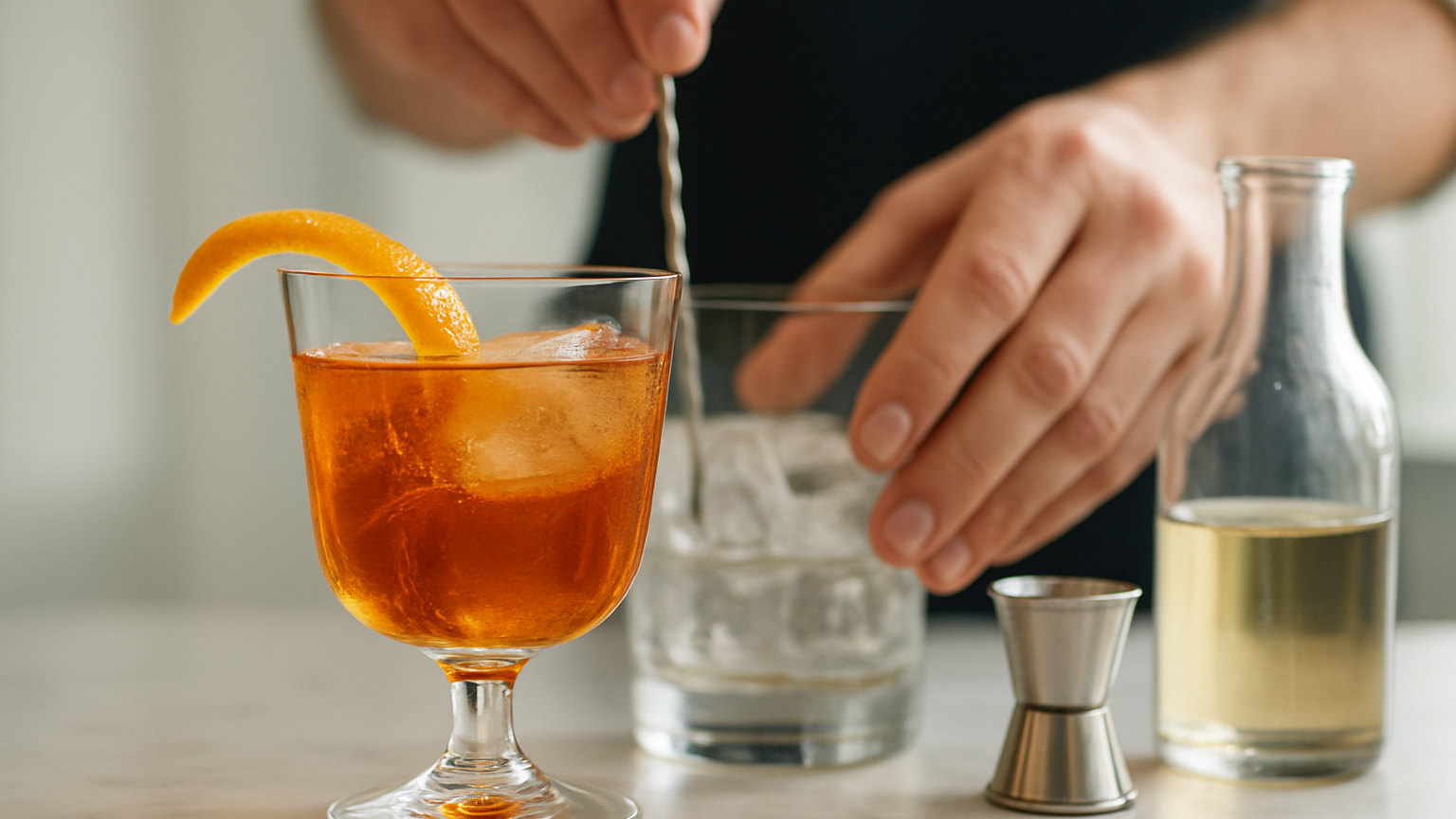
A single large cube is the sensible compromise, chilling genuinely while diluting slowly.
Ice in wine
Harder to defend on technical grounds and defensible on practical ones.
Wine is around twelve to fourteen per cent alcohol, so it has considerably less to spare than a spirit at forty. Dilution thins it noticeably.
It also chills it below the intended serving temperature, and very cold wine tastes of less.
Against that: wine served too warm is a considerably more common fault than wine served too cold, and a warm white or rosé on a hot afternoon is not enjoyable.
If the alternatives are ice or warm wine, ice wins.
Better alternatives for wine
Chill it properly in the first place, using an ice bath with water and salt, which takes fifteen minutes.
Chill the glass, which costs nothing.
Pour smaller measures more often, so the wine in the glass does not warm.
Use frozen grapes, which chill without diluting, though they do warm quickly.
Keep the bottle in an ice bucket with ice and water rather than on a table.
Where ice in wine is entirely normal
A spritzer, wine with soda over ice, is a legitimate drink and has been for a long time.
Sangria and tinto de verano are served over ice as a matter of course.
Some producers explicitly recommend serving their rosé over ice, and glasses filled with ice are standard practice in parts of southern Europe on hot afternoons.
The idea that ice in wine is universally wrong does not survive contact with how wine is actually drunk in warm climates.
The wider point
These arguments are frequently about status rather than about the drink.
Someone who enjoys their whisky with ice, or their rosé over ice on a hot day, is not doing anything that requires correction.
What is worth knowing is what each choice does, so the decision is deliberate. Ice chills and dilutes; cold suppresses aroma; dilution opens up spirits and thins wine.
Knowing that lets someone choose rather than follow a rule, which is the useful outcome.
The one genuine caution
An expensive, delicate, aged spirit bought specifically for its complexity is largely wasted with a great deal of ice, since the qualities you paid for are the ones being suppressed.
That is an argument about matching the bottle to the occasion rather than about ice being wrong, and the same spirit on a hot evening with a cube in it is nobody's business but the drinker's.
How much water to add
For anyone trying water in whisky rather than ice, start with a few drops rather than a splash.
Use a pipette or the end of a spoon, taste, and add more if it needs it. It is easy to add and impossible to remove.
Cask strength spirits generally take considerably more water than one bottled at forty per cent, which frequently needs none at all.
Which water
Still, at room temperature, and ideally low in minerals. Heavily chlorinated tap water will be tasted.
Bottled still water or filtered tap water both work perfectly well.