Swizzling is a mixing technique from the Caribbean, using a stick with radiating prongs spun rapidly in a glass packed with crushed ice. It is not a stir and not a shake, and it produces a distinctly different result.
The stick
A traditional swizzle stick is cut from a small tree native to the Caribbean, with a whorl of five or six radiating branches at one end. It is known locally as a bois lélé.
The stick is held between the palms and rubbed back and forth, spinning the prongs in the ice.
The modern plastic and metal versions found in bar shops work adequately, and a long-handled bar spoon spun the same way is a serviceable substitute.
Plastic drink stirrers, confusingly also called swizzle sticks, are unrelated and do nothing.
What the technique does
Three things simultaneously.
It chills the drink very rapidly, since crushed ice presents an enormous surface area and the agitation maximises contact.
It dilutes quickly, which is intended, since a swizzle is meant to become longer and softer as you drink it.
And it aerates lightly, giving a texture between a stirred and a shaken drink.
The visible sign that it is done is frost forming on the outside of the glass, which happens within ten to fifteen seconds of proper swizzling.
The Queen's Park Swizzle
The classic and the best introduction.
Muddle eight to ten mint leaves gently in a tall glass with 20 millilitres of sugar syrup and 25 millilitres of fresh lime juice.
Add 60 millilitres of aged rum, preferably something dark and characterful.
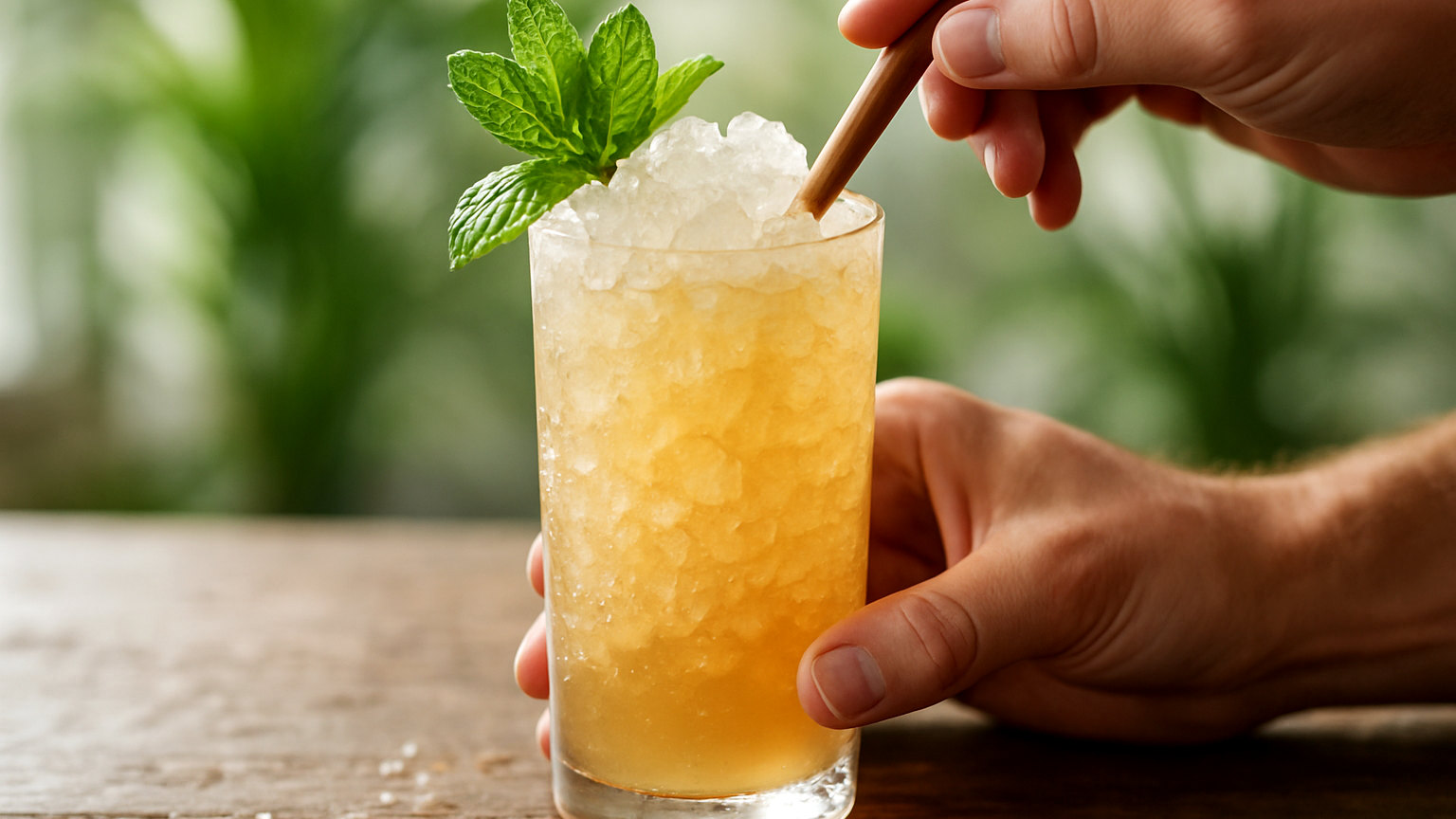
Fill the glass with crushed ice and swizzle until frosted.
Top with more crushed ice, mounding it above the rim, and add several dashes of aromatic bitters on top so they bleed down through the ice.
Garnish with a mint sprig and serve with a straw.
Why crushed ice
The technique requires it.
Crushed ice packs densely enough to be spun by the stick, where cubes simply rattle around.
Its surface area is what makes the rapid chilling possible.
And the continuous dilution is part of the design: a swizzle starts concentrated and strong and becomes progressively longer and more refreshing, which is why it works in heat.
The packed ice also holds the bitters in suspension as they descend, producing the layered appearance.
Making crushed ice
Wrap cubes in a clean tea towel and hit them with a rolling pin.
A Lewis bag, being canvas, absorbs the meltwater and produces drier crushed ice that packs better, which matters for a swizzle more than for most drinks.
Avoid a food processor, which produces slush and is hard on the blades.
Other swizzles
The template is spirit, citrus, sugar and crushed ice, which accepts substitution freely.
A rum swizzle with falernum and bitters is common in Bermuda.
Gin, whisky and brandy all work with the technique.
Anything built over crushed ice can be swizzled rather than stirred, including a julep or a bramble, which chills them faster.
Serving it
A tall glass, packed and mounded with ice, and a straw, since a mound of crushed ice is difficult to drink from the rim.
Serve immediately, since the frost and the layered bitters are both temporary.
And expect the drink to change substantially between the first mouthful and the last, which is the point rather than a fault.
Why the technique survived
Swizzling predates mechanical refrigeration, and in a hot climate with limited ice it was an efficient way to get a drink as cold as possible with what was available.
That it also produces a distinctive texture and a drink that lengthens as you go is why it persisted once ice became plentiful.
Trying it
A Queen's Park Swizzle is the drink to start with, since it demonstrates everything the technique does in one glass.
A bar spoon spun between the palms works well enough to find out whether it is worth buying a proper stick.