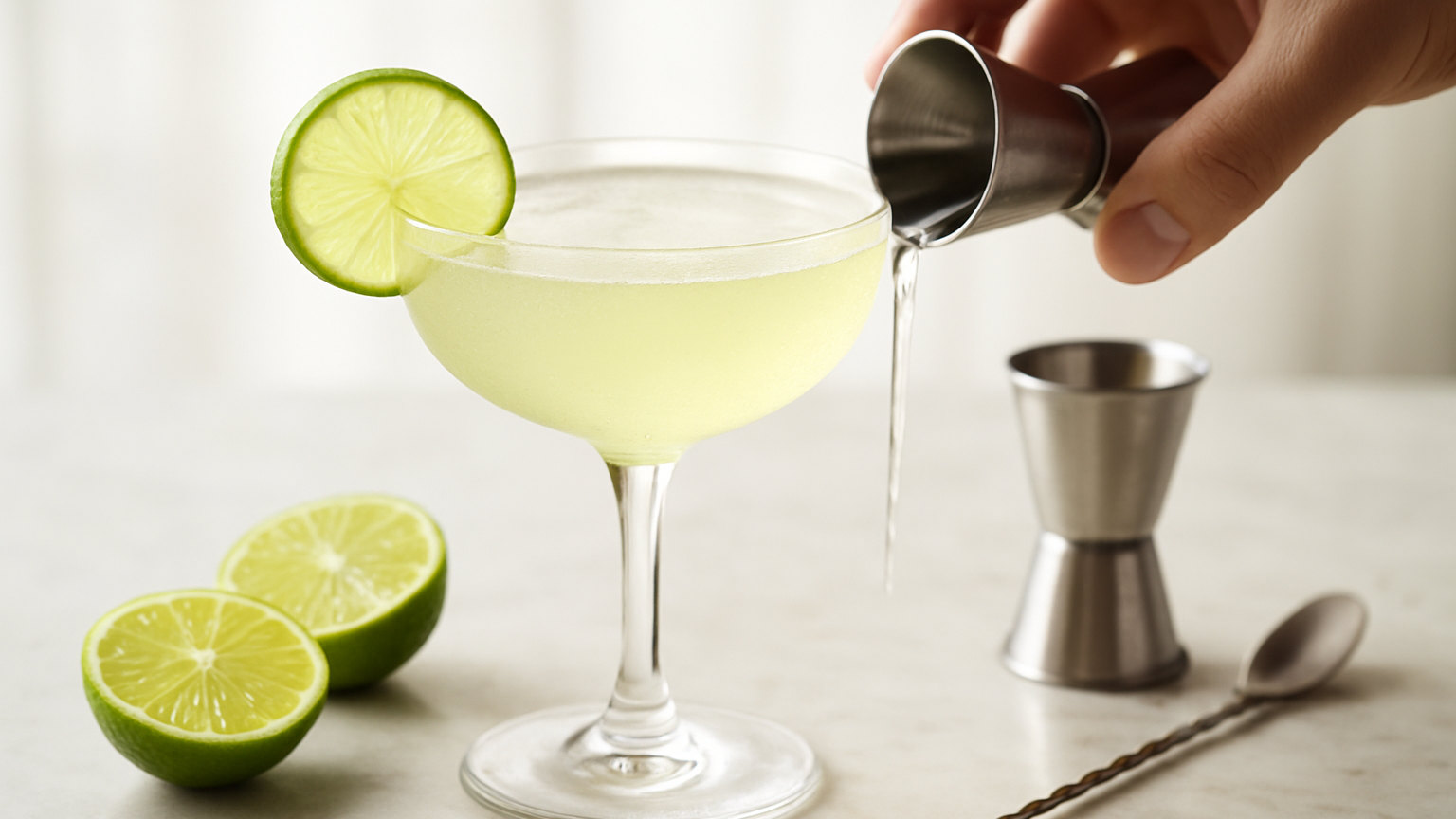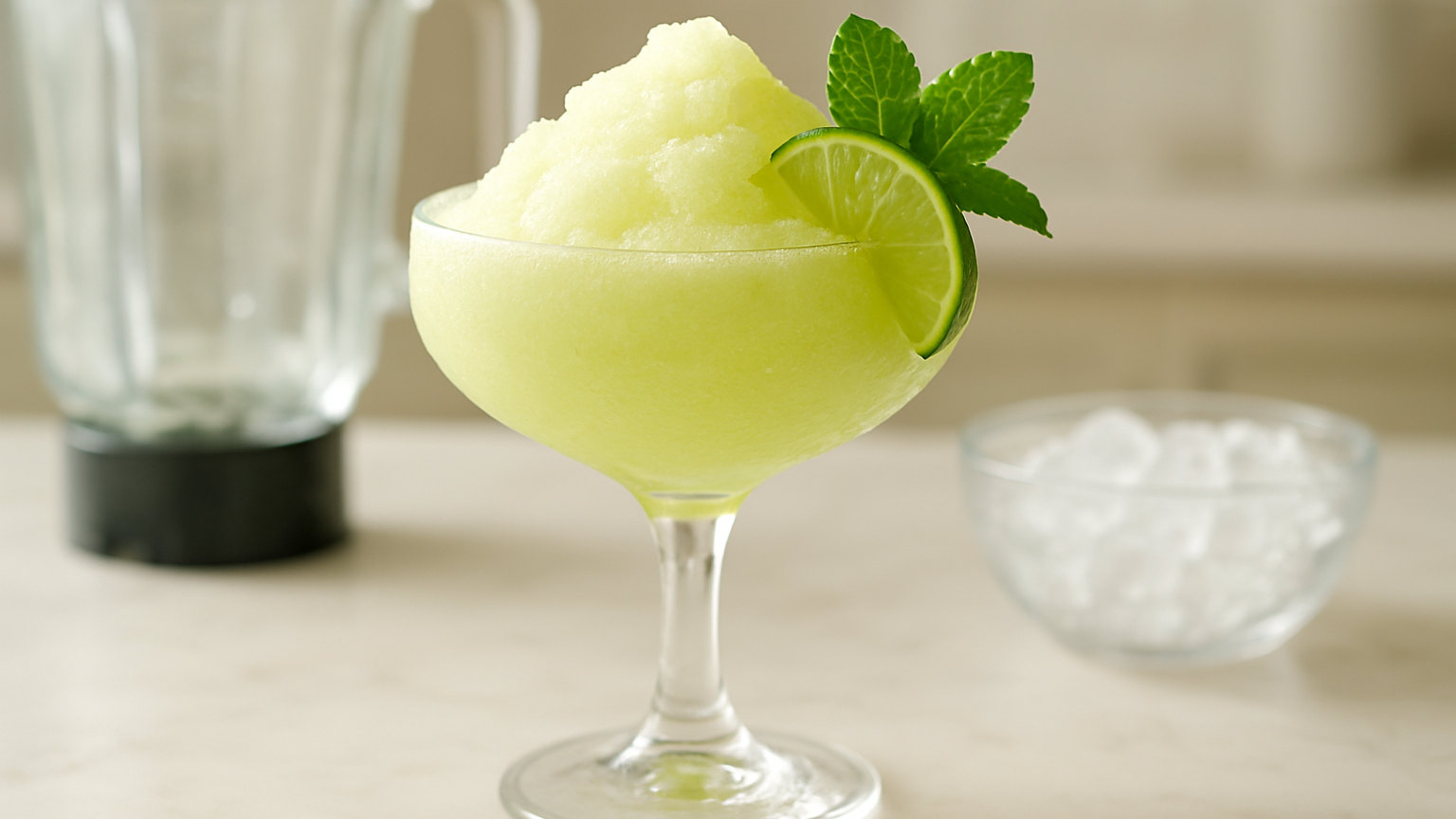
Frozen blended drinks acquired a poor reputation through machine-dispensed slush made from sweetened mix, and the technique behind them is sound. A properly made frozen daiquiri is an excellent drink with a genuine history.
What blending does
It combines chilling, dilution and aeration into a single process, producing a drink with a thick, smooth texture.
The ice is not an addition to the drink; it becomes the drink, incorporated as tiny crystals suspended in the liquid.
That texture is the point. A blended drink is a different sensory experience from the same ingredients shaken.
The ratio problem
Where most home attempts fail.
Too little ice produces a thin, watery drink that separates in the glass.
Too much produces something so thick it will not pour and tastes of very little, since the flavours are diluted across a large volume of ice.
A workable starting point is around 150 to 200 grams of ice per serving, which is roughly a cup of standard cubes for a single drink.
Measure it rather than estimating, since the quantity determines the whole result.
Adjusting the recipe
A blended drink needs to be built differently from a shaken one.
Increase the sweetness and the acid, since cold suppresses both and the ice dilutes everything.
A frozen daiquiri wants noticeably more sugar and lime than a shaken one, and a frozen margarita likewise.
Taste and adjust before pouring, which means stopping the blender and trying it.
Technique
Use crushed or small ice rather than large cubes, which strain the motor and blend unevenly.
Add the liquids first and the ice last, so the blades have something to work with.
Blend in short bursts rather than continuously, and stop as soon as the texture is smooth. Over-blending warms the mixture through friction and produces a thinner drink.
Serve immediately. A blended drink separates within a few minutes as the ice settles.
Which drinks suit it
Sours with plenty of acid and sugar work best, since both survive the dilution and the cold.
The frozen daiquiri has a genuine pedigree, with the Havana version made with fresh lime, good rum and a little maraschino liqueur.
The frozen margarita works well for the same reasons.
Fruit-forward drinks blend excellently, since frozen fruit can replace some of the ice and contributes flavour rather than diluting.
Which do not
Spirit-forward stirred drinks. A frozen negroni or martini loses everything that makes it work, since the cold suppresses the aromatics that are the entire content of the drink.
Anything delicate, which the ice will bury.
Anything carbonated, which will foam uncontrollably and lose its bubbles.
Frozen fruit
The most useful adjustment.
Replacing some of the ice with frozen fruit produces a thicker, more flavourful drink with less dilution, since the fruit contributes body and flavour where ice contributes only water.
Frozen strawberries, mango, peach and banana all work, and this is how a good frozen fruit daiquiri is made rather than by adding syrup to a slush.
Equipment
A blender capable of handling ice. Cheaper models struggle and produce uneven results, and crushing the ice first helps considerably.
A tamper is useful for pushing the mixture down onto the blades.
Chilled glasses help, since a blended drink melts quickly in a warm one.
The reputation problem
Machine-dispensed frozen drinks made from bottled mix bear no relation to a blended cocktail made with fresh ingredients.
Anyone who tried one and concluded they dislike frozen drinks has not really had one, which is the same story as the mai tai and the margarita.
Making several at once
Blended drinks scale better than most, since a blender handles four servings as easily as one.
Blend the whole batch and pour immediately, since it separates within minutes and cannot be usefully held.
Chill the glasses beforehand, which buys a few extra minutes.
Cleaning the blender
Rinse immediately, since sugar and citrus set hard on blades and in the seal.
Blending warm water with a drop of detergent for a few seconds clears most of it.