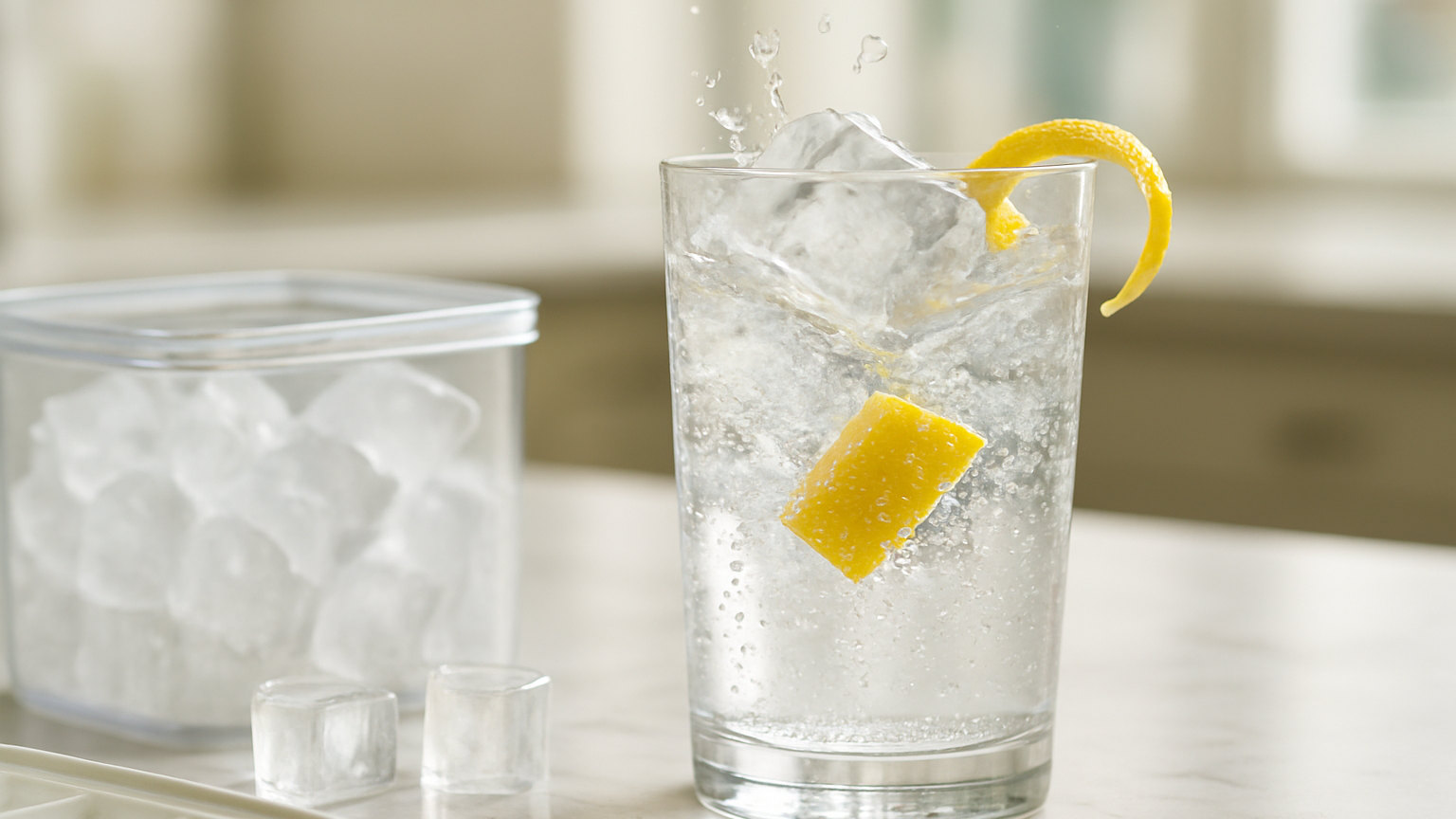
A drink that tastes faintly of fish, curry or something indeterminate is almost always the ice. It is the most common cause of a home drink being subtly wrong, and it is entirely preventable.
Why it happens
Ice absorbs volatile compounds from the air around it. A freezer contains a great deal of aromatic material, much of it uncovered, and an open ice tray sits in that air for weeks.
The transfer is real and cumulative. Ice made yesterday tastes of almost nothing; ice that has been in an open tray for two months tastes of the freezer.
Sublimation
The other process at work.
Ice sublimates, meaning it converts directly from solid to vapour without melting. In a frost-free freezer, which cycles to prevent ice building up, this happens continuously.
The visible signs are cubes that have shrunk, developed a pitted surface and lost their sharp edges.
Shrunken ice is also concentrated ice: as water leaves, whatever was dissolved in it stays behind, which is why old ice tastes stronger of whatever it has absorbed.
The fix
Store ice in a sealed bag or a covered container. That is the whole solution and it costs nothing.
A resealable freezer bag works. A lidded plastic tub works. Anything that keeps the freezer air off the ice works.
Let cubes frost over before bagging them, since wet ice sticks together into a solid mass.
Make it fresh
The second half of the answer.
Ice does not keep indefinitely even when sealed, though it keeps far longer. Making a batch every week or two and using the older ice first prevents the problem entirely.
A tray that has been in the freezer since Christmas should be discarded rather than used, since nothing will make it taste right.
Does filtered water help
For flavour, sometimes.
Heavily chlorinated tap water carries through into the glass, and a jug filter removes most of the chlorine. In areas where the water tastes noticeably of it, this makes a real difference.
In soft water areas with good-tasting tap water, the difference is small. It is worth tasting your own tap water cold before deciding it matters.
Filtering does not affect clarity meaningfully, which is a separate problem caused by the direction of freezing rather than by water quality.
Other sources of off flavours
Plastic trays absorb odours over time and eventually transfer them. Silicone is better in this respect and also picks up smells if stored uncovered.
Ice made in a tray that previously held something else, or washed in strongly scented detergent, will carry it.
Bagged ice bought from a shop is usually neutral and can pick up odours in a home freezer just as readily once opened.
The routine
Make ice weekly, in a clean mould, using water you would drink.
Transfer it to a sealed bag once frozen.
Keep raw fish, strong cheese and heavily spiced leftovers wrapped, which improves the whole freezer rather than just the ice.
Discard anything shrunken or pitted.
Why it is worth the attention
Ice is a substantial proportion of most long drinks by volume, and it ends up entirely dissolved in the glass.
Anything it has absorbed goes into the drink, which makes it the ingredient with the largest surface contact and the least scrutiny.
Two minutes a week solves it permanently.
Testing your own ice
Put a cube in a glass of water at room temperature, leave it to melt, and taste the water.
It should taste of nothing. Anything you can detect is what your drinks have been carrying.
Most people who try this once change how they store ice permanently.
A last point
Ice from a bag that has been opened and left in the freezer behaves exactly like tray ice, absorbing odours and sublimating.
Seal the bag or decant it into a container.
Why it matters more than it seems
Ice ends up entirely dissolved in the drink, which makes it the ingredient with the largest contact and the least attention.
Anything it has picked up goes into the glass, undiluted by any other process.