A dry shake means shaking all the ingredients without ice before shaking again with it. It exists for one purpose: building a stable foam in drinks containing egg white or a plant-based substitute.
Why it works
Egg white is largely protein suspended in water. Agitation unfolds those protein molecules, which then link together around air bubbles to form a stable network.
That process is temperature-dependent. Cold slows it substantially, so shaking with ice from the start produces a thin foam that collapses within a minute.
Shaking without ice first lets the proteins do their work at a warmer temperature, and the structure holds once the drink is chilled afterwards.
Aquafaba, the liquid from a tin of chickpeas, contains proteins and saponins that behave similarly, and it benefits from the same treatment.
The method
Combine everything including the egg white in the shaker with no ice.
Shake hard for around fifteen seconds. Genuinely hard: this is where most attempts fail, and a polite rattle produces bubbles rather than foam.
Then add ice and shake again for ten to twelve seconds to chill and dilute.
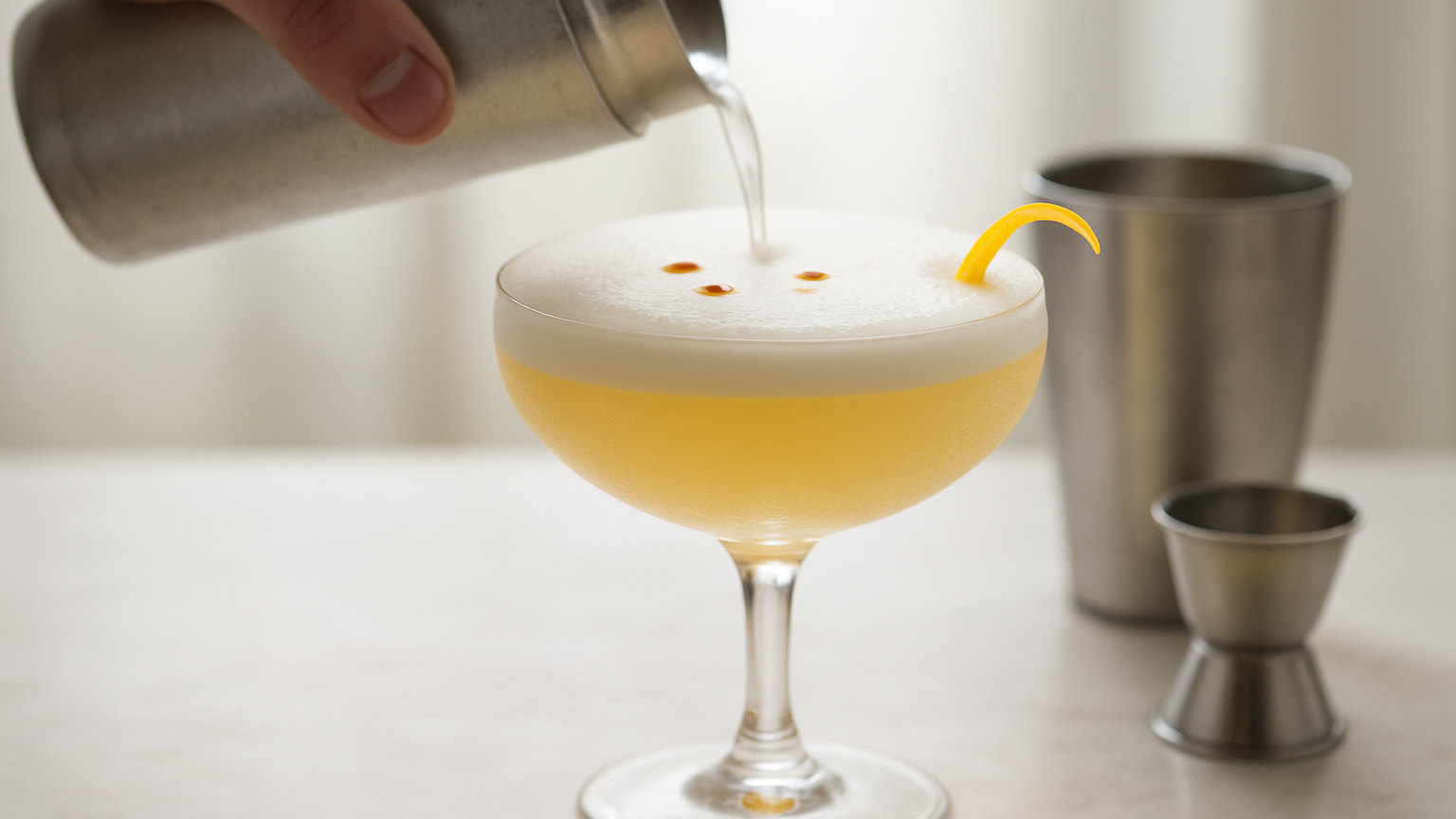
Double strain through a fine mesh so ice fragments do not break the surface.
Let the drink settle for twenty seconds before adding any garnish on top, so bitters sit rather than sinking.
The reverse dry shake
An alternative many bartenders prefer.
Shake with ice first to chill and dilute, then strain the ice out and shake again without it.
The reasoning is that building the foam last means it is not disrupted by the subsequent shaking with ice, and it produces a denser, more stable result.
It requires an extra step and a second vessel to strain into, and the difference is real if modest.
Both methods work. The reverse is slightly better and slightly more effort.
The spring trick
Adding the spring from a Hawthorne strainer to the shaker during the dry shake acts as a whisk, breaking up the mixture and building foam faster.
It works and reduces the effort required noticeably.
Wash the spring afterwards, since egg protein sets in the coils.
Quantities
One egg white per drink, or around 20 to 25 millilitres if measuring from a carton.
For two drinks, one and a half whites is usually enough rather than two, since more egg makes the drink heavy.
Aquafaba: roughly the same volume as an egg white.
Safety
Raw egg carries a small risk. Pasteurised egg white sold in cartons removes the concern entirely and performs identically, which makes it the sensible choice when serving guests.
Anyone pregnant, elderly, very young or with a compromised immune system is generally advised to avoid raw egg, and current guidance is worth checking rather than assuming.
Egg is a declarable allergen, so say what is in a drink when serving it.
When else to dry shake
Anything containing cream or dairy benefits, for similar reasons.
Drinks with a substantial quantity of fruit purée sometimes benefit, since the dry shake incorporates it more evenly.
A drink with pineapple juice foams naturally and does not need it, since the foam comes from compounds in the juice rather than from protein structure.
Troubleshooting
Thin foam usually means the dry shake was too short or too gentle.
Foam collapsing quickly usually means the glass was not clean, since fat and detergent residue destroy foam exactly as they do on a beer.
A drink tasting of egg means too much white was used, since a correct quantity is undetectable.
The drinks that use it
The whiskey sour in its Boston version, the pisco sour, the silver gin fizz, the clover club and the ramos gin fizz.
Beyond the classics, almost any sour is improved by it if you want a softer, richer drink, and it is worth trying with a daiquiri or a margarita to see how much it changes them.
Cleaning after egg
Rinse the shaker and strainer in cold water immediately.
Hot water sets the protein onto the metal, and dried egg white in a fine strainer mesh is the usual reason one stops working properly.