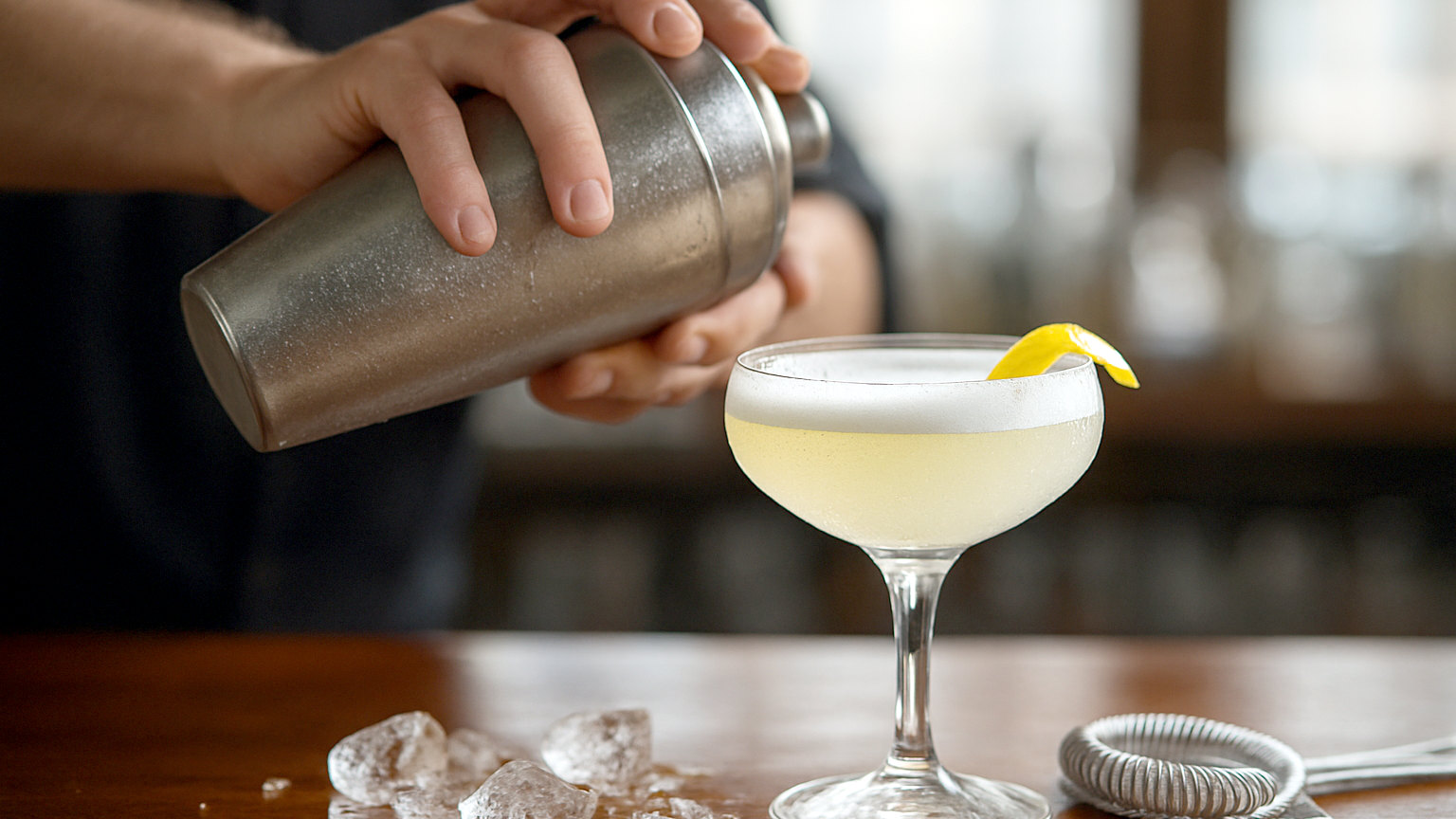
The hard shake is a specific shaking technique developed in Japan, associated principally with the bartender Kazuo Uyeda. It has a devoted following and a considerable amount of scepticism attached, and both positions have something to them.
What it is
A particular pattern of movement rather than simply shaking harder.
The described technique involves a three-stage motion in which the shaker travels in a figure that changes direction sharply, with the wrists doing much of the work and a specific grip.
The intention is to move the ice in a controlled path that maximises contact with the liquid while producing very fine ice fragments and a particular aeration.
Detailed descriptions vary, and learning it properly is generally said to require demonstration rather than reading.
What supporters claim
A smoother, rounder texture with finer bubbles than an ordinary shake produces.
Better integration of the ingredients, particularly in citrus-based drinks.
A cooler drink at the same level of dilution.
Bartenders who use it describe a clear difference, and enough experienced people report it that dismissing it entirely seems premature.
What sceptics say
That the physical mechanism has never been clearly established.
That controlled comparisons are almost impossible to run blind, since the person shaking knows which technique they used and the person tasting has usually been told.
That the variables which demonstrably matter, meaning ice quality, quantity, duration and vigour, are sufficient to explain any observed difference.
And that a technique requiring years of practice to produce a subtle effect is a poor use of attention when more consequential things are being neglected.
What is genuinely known
Shaking harder chills and dilutes faster, which is uncontroversial.
Aeration affects texture, which is uncontroversial.
Fine ice fragments in the finished drink change the mouthfeel, which is why double straining exists.
Whether a particular movement pattern produces a distinguishable result beyond those factors is not settled.
The wider Japanese approach
Worth separating from the specific technique, since the general practice is less contested and more useful.
Japanese bartending emphasises precision, hand-cut clear ice, chilled glassware, exact measurement and attention to every stage.
Those things demonstrably improve drinks, and a bar following them will produce excellent cocktails whether or not the shake is doing anything special.
The whisky highball is the clearest example: a drink treated with genuine care, using specific ice and a particular pour, and noticeably better as a result.
Should you learn it
Probably not, for most people.
The things that will improve your drinks most are cold dry ice in quantity, shaking hard enough for long enough, accurate measurement, fresh citrus and chilled glassware.
Those are all straightforward and produce large, reliable improvements.
If you have all of them in place and want to pursue something further, the hard shake is an interesting thing to explore and it is genuinely difficult to learn without instruction.
The reasonable position
Something is probably happening, its magnitude is uncertain, and it is a long way down the list of things that affect a drink.
Treating it as either a revelation or a fiction both seem overstated, which is a fair description of a good deal of bar technique.
Learning from the approach anyway
Whatever the shake does, the surrounding practice is worth copying.
Everything prepared before starting. Glassware chilled. Ice cut deliberately for the drink it is going into. Measures exact. Nothing rushed.
Those habits produce better drinks reliably, and none of them requires any special ability.
Where to see it
Bars specialising in Japanese-style service exist in most large cities, and watching one is more informative than any description.
The whole approach, rather than the shake specifically, is what repays the visit.
The books
Uyeda's own writing on technique has been translated and is the primary source for anyone genuinely curious.
It is worth reading as a document of an approach rather than as a manual, since the technique is generally said to need demonstration.