Heat speeds extraction. A sous vide circulator holds a precise temperature for hours, which is why it turned up in bars as an infusion tool and why it produces in an afternoon what a jar takes days to achieve.
What heat does
Increases the rate at which compounds move from the solid into the liquid, roughly doubling extraction speed for every ten degrees or so.
It also extracts a slightly different set of compounds. Some flavours only come out with heat; some delicate aromatics are driven off by it.
So a warm infusion is not simply a faster cold one. It is a different result, and which you prefer depends on the ingredient.
Where it helps
Hard ingredients that extract slowly: roots, hard spices, dried fruit, coffee beans, cacao nibs.
Anything where you want a deep, rounded extraction rather than a bright fresh one.
Fat washing, where gentle warmth keeps the fat liquid and speeds the transfer.
Batch work, where doing several infusions at once in a single water bath is genuinely convenient.
Where it does not
Delicate herbs, citrus peel and flowers, where heat drives off exactly the volatile aromatics you are trying to capture.
Anything where freshness is the point.
Chilli, which extracts so fast at room temperature that speeding it up is unnecessary and makes it harder to control.
The method
Seal the spirit and the ingredient in a bag or a jar, excluding as much air as possible.
Hold at around fifty five to sixty degrees for one to two hours, depending on the ingredient.
Cool the bag or jar completely before opening it.
Strain and bottle as normal.
Safety
The point that matters and is frequently glossed over.
Alcohol vapour is flammable, and warm alcohol produces considerably more of it than cold.
Keep the whole operation away from any flame or heat source, including a gas hob, and do not open a warm bag near one.
Cool everything to room temperature before opening. A bag of hot alcohol opened at the seal releases a substantial quantity of vapour.
Do not exceed sixty five degrees or so. Ethanol boils at around seventy eight degrees and produces vapour well below that, and there is no benefit to going higher.
Use a bag or jar rated for the temperature, and if using a jar, do not seal it fully, since pressure builds as the contents warm.
Low-tech alternatives
Most of the benefit is available without any equipment.
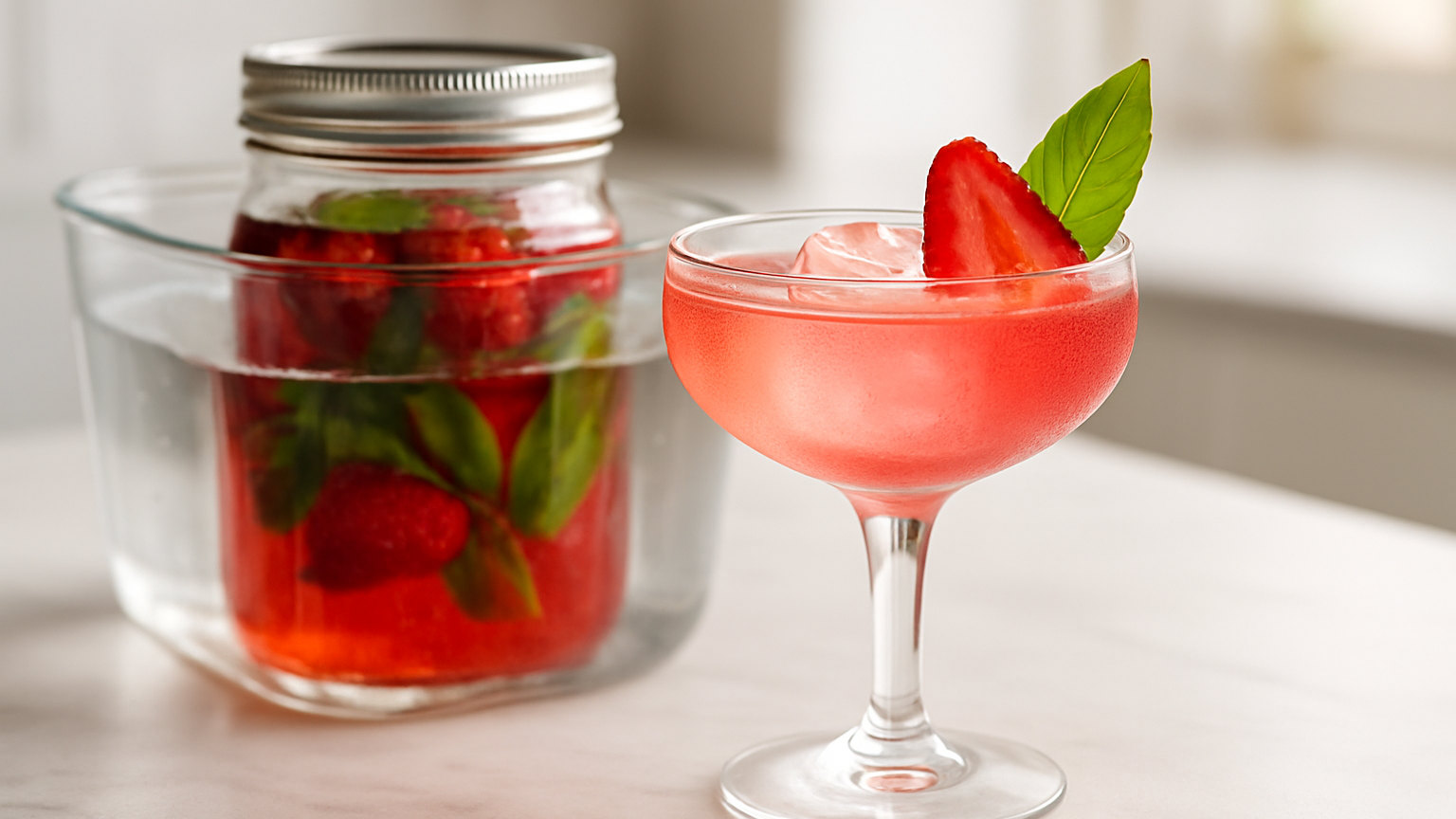
A pan of water on a hob, brought to around sixty degrees and taken off the heat with the jar sitting in it, holds a useful temperature for an hour or more.
A thermos flask filled with warm water with the jar inside does the same thing.
A slow cooker on its lowest setting, with the lid off and a thermometer in the water, is a reasonable substitute.
None is as precise as a circulator and all are adequate for infusing spices into spirit.
The simplest alternative of all
Waiting.
A jar on a shelf produces excellent results for almost every ingredient, and the only cost is time.
Given that most infusions are made in advance rather than urgently, the case for equipment is weaker than it first appears.
Other rapid methods
Whipping siphons charged with nitrous oxide are used in some bars to force liquid into a solid ingredient under pressure and then release it rapidly, extracting in minutes.
It works and involves pressurised gas and specific equipment, and it is well beyond what a domestic kitchen needs.
For anyone curious, the technique is worth reading about and is not something to improvise with equipment not designed for it.
The reasonable position
If you already own a circulator, use it for hard ingredients and fat washing.
If you do not, a jar and a fortnight produces results that are just as good for almost everything, and the pan-of-water method covers the rest.
Judging when it is done
Taste rather than timing, whichever method you use.
A warm infusion moves fast, so check after thirty minutes and then every fifteen. Strain as soon as it reaches the point you want.