Spice infusions are among the most rewarding things to make at home and the easiest to overdo. Chilli in particular has a habit of arriving late and staying.
Why chilli is difficult
Capsaicin, the compound responsible for heat, is highly soluble in alcohol and extracts quickly.
It also builds on the palate rather than registering immediately, so a tasting that seems fine can turn out to have been considerably hotter than it appeared.
And it cannot be removed once extracted. Diluting with more spirit weakens everything rather than just the heat.
The result is that chilli infusions should be tasted frequently and stopped early.
The method
Slice one or two chillies and decide whether to include the seeds and the white membrane, which carry most of the heat. Removing them gives flavour with far less burn.
Add to 200 millilitres of spirit in a sealed jar.
Taste after fifteen minutes, then every ten minutes thereafter.
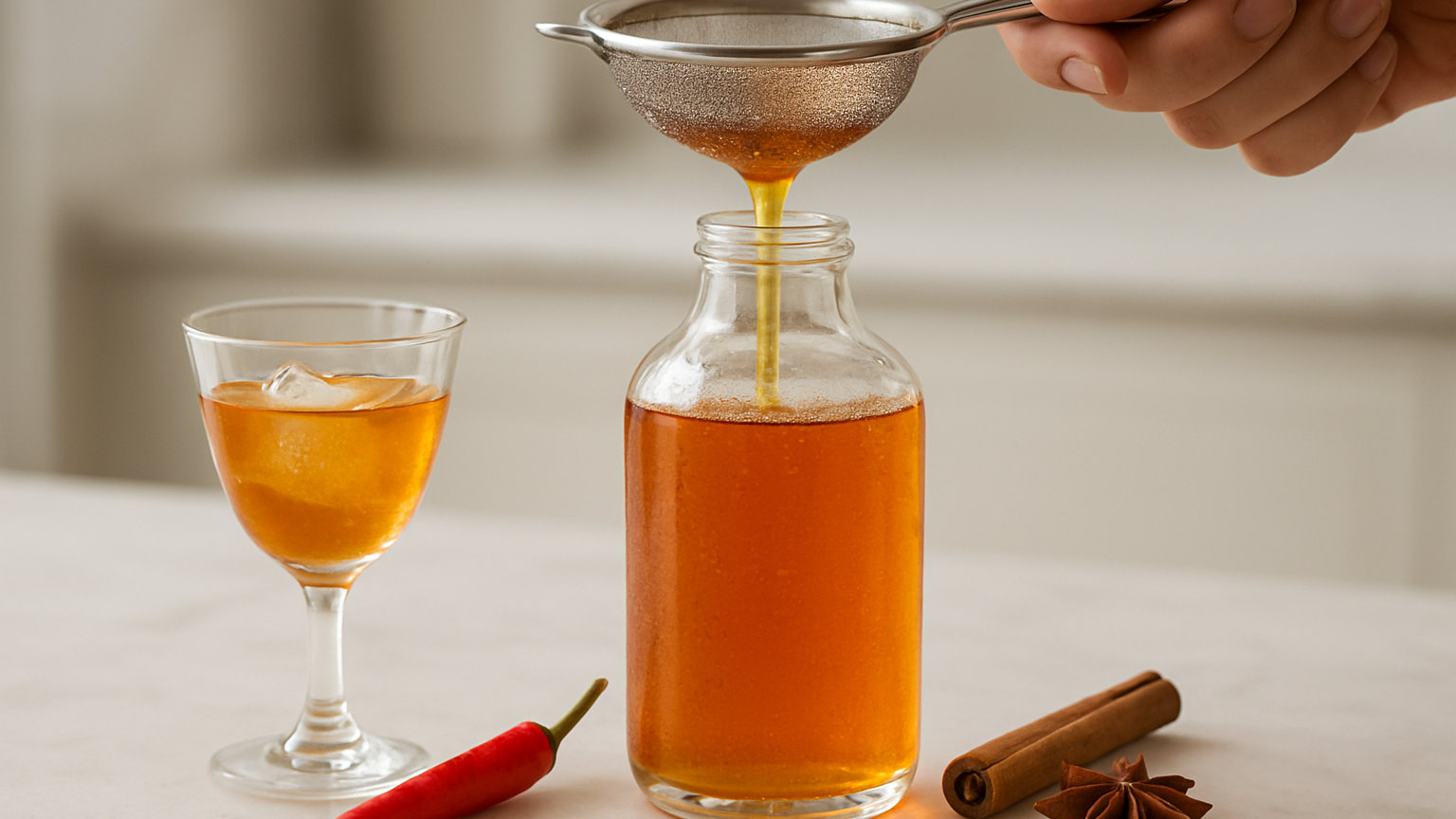
Strain as soon as it reaches the level you want, and remember that it will seem hotter an hour later than it does at the moment of tasting.
For a syrup, the same applies with warm syrup in place of the spirit.
Handling chillies
Capsaicin does not wash off with water and transfers readily to skin.
Wash hands thoroughly with soap after handling, and avoid touching eyes or face until you have.
Gloves are sensible with hotter varieties.
Milk or a fatty substance removes capsaicin from skin more effectively than water, which is worth knowing if you get it somewhere uncomfortable.
Very hot varieties should be treated with genuine caution, and the extremely hot ones sold as novelties are not appropriate for casual infusion.
Which chillies
Jalapeño is the reliable choice for tequila and mezcal drinks: moderate heat and a distinct green vegetal flavour.
Serrano is hotter and cleaner.
Bird's eye is considerably hotter and works in small quantities.
Dried chillies extract more slowly and give a deeper, smokier result. Chipotle in particular suits whisky and mezcal.
Smoked paprika in a syrup gives colour and smoke with essentially no heat.
Hard spices
Considerably more forgiving than chilli and still capable of dominating.
Cinnamon, cardamom, star anise, clove and allspice all extract in hours rather than days in alcohol, and in thirty minutes to an hour in warm syrup.
Crack whole spices rather than grinding them, since ground spice makes the result cloudy and difficult to strain.
Toasting them briefly in a dry pan before infusing deepens the flavour noticeably.
Clove is the one most likely to take over, and a small number of whole cloves is plenty.
Making a spiced rum
The classic application, and better made at home than most commercial versions, which are frequently heavily sweetened.
Combine an aged rum with a vanilla pod split lengthways, a cinnamon stick, four or five allspice berries, three cloves, a strip of orange peel and a slice of fresh ginger.
Leave for three to five days, tasting daily, and strain when it suits you.
Sweeten very lightly with demerara syrup if you want to, or leave it dry.
The tincture alternative
For chilli in particular, a tincture is the better approach.
Infusing chilli into a small quantity of high-strength spirit produces a concentrate that can be added to a drink drop by drop, so the heat is controlled at the point of serving rather than committed to a whole bottle.
Two or three drops in a margarita gives a controllable warmth that muddling chilli into a shaker cannot.
Labelling
Chilli-infused spirits look exactly like uninfused ones.
Label the bottle clearly with what it is and roughly how hot, since someone pouring a measure without knowing is in for an unpleasant surprise.
The same applies to anything infused, and it matters most where the surprise would be uncomfortable.
Using them
A chilli tequila needs only lime and agave to make an excellent margarita.
A spiced rum needs only ginger beer and lime.
Simple drinks show an infusion best, since there is nothing competing with the work you have done.