Fresh citrus juice is the best ingredient in cocktails and it lasts hours. A cordial is the compromise: not quite as bright, considerably better than bottled, and it keeps for a week or more.
The traditional method
Peel the citrus, taking wide strips of the coloured layer with as little white pith as possible.
Combine the peels with an equal weight of sugar, muddle to bruise them, cover and leave for four to twelve hours. The sugar draws the aromatic oil out of the peel, producing an intensely fragrant syrup.
Add the juice of the fruit and stir until the sugar dissolves. Strain out the peels.
The result is a cordial carrying both the oil and the juice, which is why it tastes considerably more of the fruit than juice alone does.
Refrigerated, it keeps around a week to ten days.
Acid adjustment
The modern bar approach, and the one that changes the arithmetic.
The acidity in citrus comes principally from citric acid in lemons and limes, with malic acid contributing as well. Both are available as food-grade powders and are inexpensive.
Combining a citrus peel infusion with water and the appropriate acids produces a liquid with the acidity and aroma of fresh juice, from a fraction of the fruit.
A common starting point is around six grams of citric acid and two grams of malic acid per hundred millilitres of liquid for a lime substitute, adjusted to taste.
Lemon is usually made with a higher proportion of citric acid, and the ratios are worth adjusting once you have tasted a batch.
Making an acid-adjusted cordial
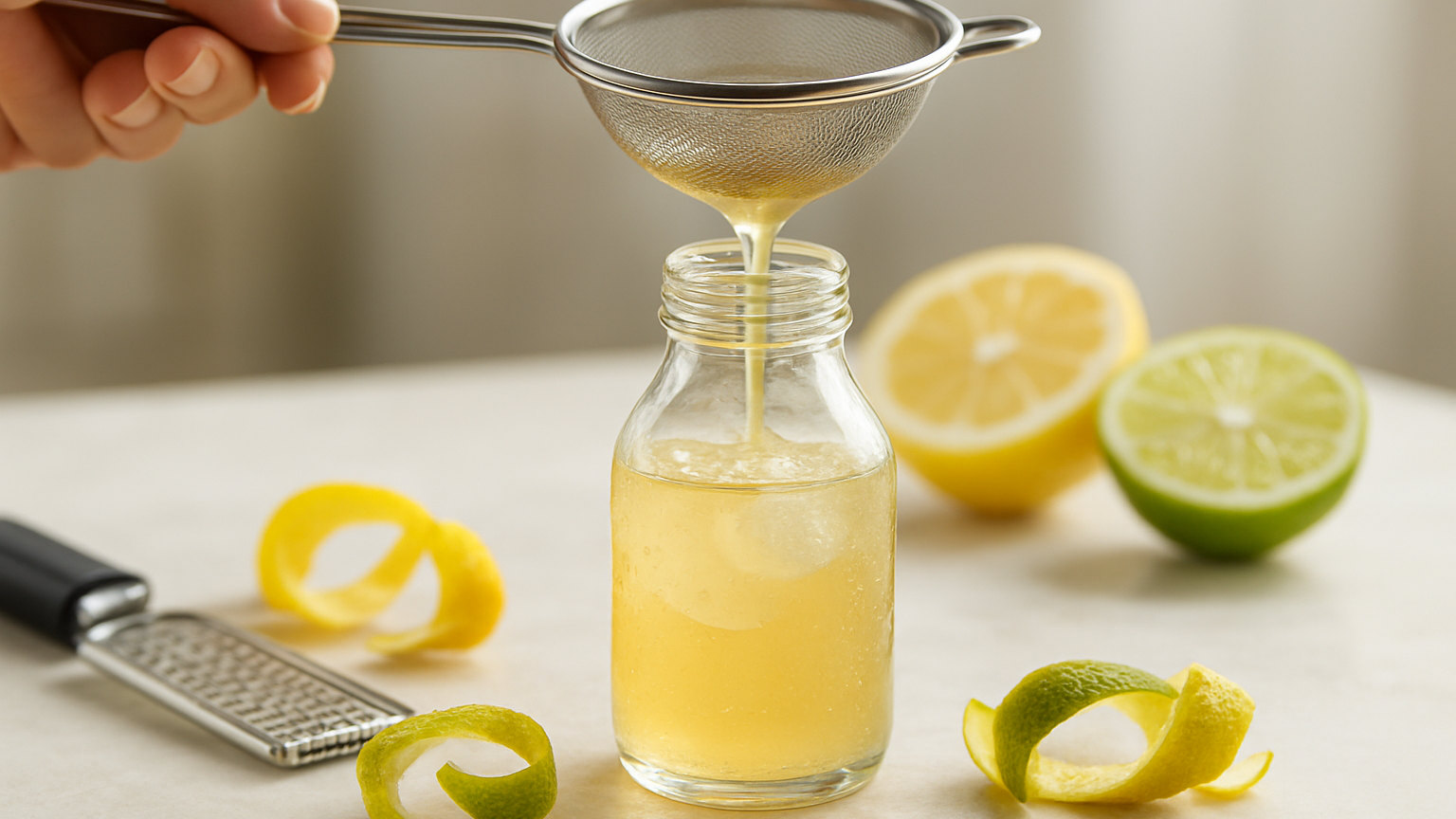
Peel four limes and combine the peels with 400 millilitres of water. Leave to infuse for a few hours, or use gentle warmth to speed it.
Strain, then dissolve the acids into the liquid at your chosen ratio.
Add sugar if you want a sweetened cordial, or leave it unsweetened as a juice substitute.
Bottle and refrigerate. It keeps a week or more, considerably longer than fresh juice.
Why bother
Three reasons.
Shelf life. A cordial made on Sunday is still good on Friday, which fresh juice is not.
Waste. Four limes producing 400 millilitres of usable acidic liquid is a far better yield than juicing them, which would give perhaps 120.
Batching. A cordial removes the timing constraint that makes shaken drinks awkward to prepare in advance.
What it is not
Identical to fresh juice.
Fresh citrus contains a great many compounds beyond acid and oil, and a cordial is a good approximation rather than a replacement.
For a daiquiri or a gimlet made attentively, fresh is better. For a batch for twenty people, a cordial is the sensible choice and nobody will complain.
The lime cordial question
Worth mentioning, since the traditional gimlet is made with a commercial sweetened lime cordial rather than fresh lime.
That product has a distinctive cooked-lime character that fresh juice does not replicate, and a gimlet made with it is a different drink from one made with fresh lime and syrup.
A homemade cordial sits between the two: fresher than the commercial product, more concentrated than fresh juice.
Buying the acids
Citric and malic acid are sold as food-grade powders by brewing suppliers, baking suppliers and online.
They are inexpensive and a small quantity lasts a long time.
Use food-grade products rather than anything sold for cleaning or other purposes, and store them labelled and away from anything they could be confused with.
Storage
Refrigerate in a clean sealed bottle, labelled with the contents and the date.
An unsweetened acid-adjusted juice is more perishable than a sweetened cordial, since there is no sugar preserving it.
Freezing works well and gives measured portions.
Which citrus
Lime and lemon are the obvious ones and the most useful.
Grapefruit makes an excellent cordial with real bitterness alongside the acidity.
Orange has too little acidity to work on its own and combines well with lemon.