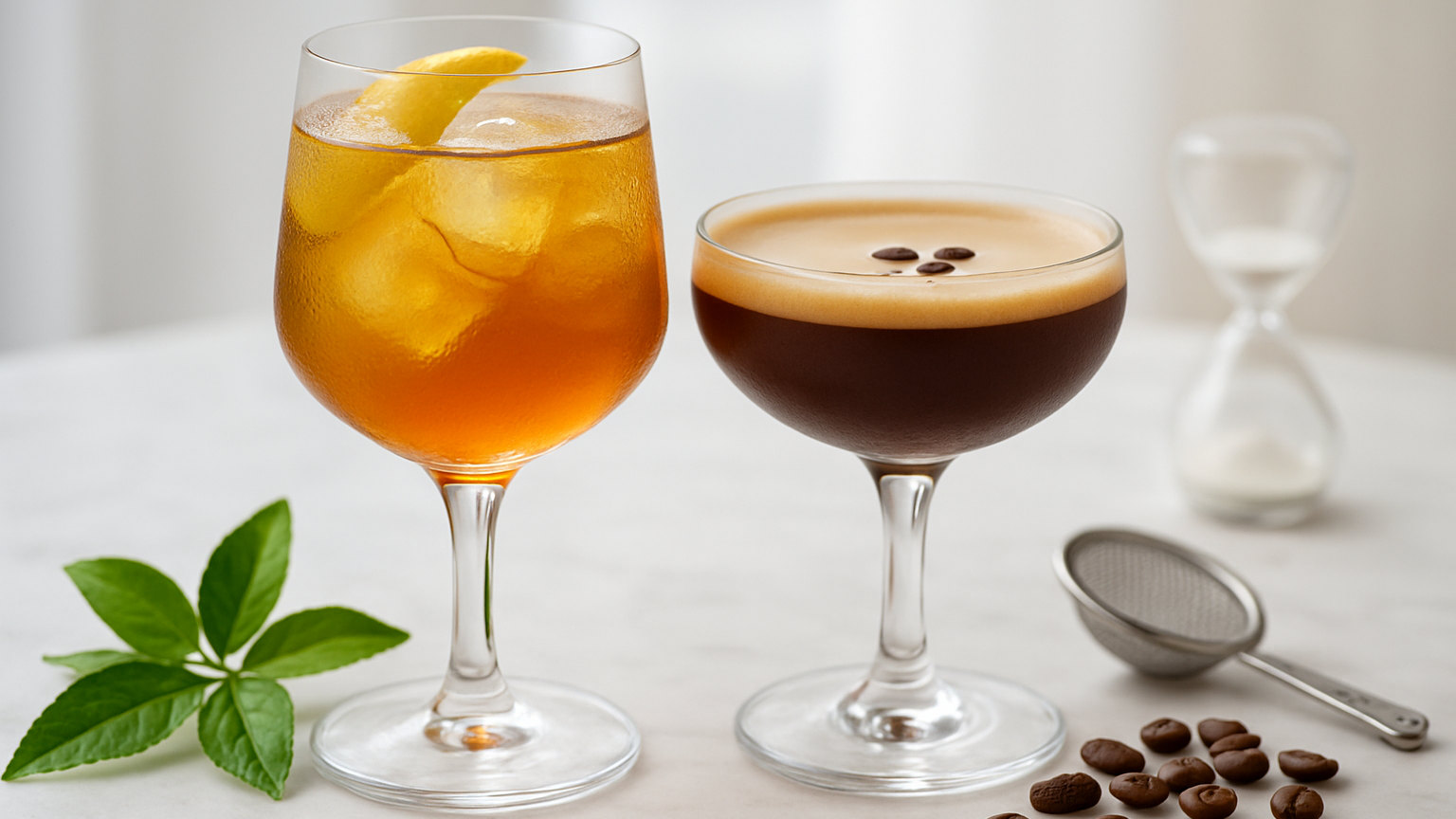
Tea and coffee are the two most useful non-alcoholic ingredients in drinks, and both are used as ingredients rather than beverages, which changes how they should be prepared.
What tea contributes
Tannin, which produces a drying astringency that reads as structure and length.
Bitterness, which gives a drink an adult character and prevents sweetness dominating.
Aroma, which varies enormously by type.
And colour, which matters more than it should for how a drink is received.
It is the closest thing there is to a general-purpose substitute for what alcohol provides at the finish of a drink, which is why it appears in so many good non-alcoholic recipes and in historical punch.
Brewing tea as an ingredient
Deliberately stronger than you would drink it, since it will be diluted by everything else in the glass.
Three or four bags in 200 millilitres of water for five minutes produces a concentrate that can be measured like a syrup.
Cool it completely before use, since warm tea will melt the ice and skew the dilution.
The main error is over-brewing, which turns tea harshly astringent rather than pleasantly structured. Green tea in particular needs cooler water and a shorter steep.
Which teas
Black tea gives the most tannin. Assam is malty and robust; Ceylon is brighter and more citrusy; Earl Grey brings bergamot that suits citrus drinks.
Lapsang souchong is the most useful single tea in drinks, since it is smoked over pine and supplies the smoke that a peated whisky or a mezcal would contribute. A small quantity goes a long way.
Green tea is delicate and vegetal and suits lighter drinks.
Hibiscus, which is not strictly tea, is sharply acidic with a cranberry quality and a deep red colour, supplying sourness as well as flavour.
Rooibos is caffeine-free, sweet and woody, and suits spiced drinks.
Cold brewing
Steeping tea in cold water for six to twelve hours in the fridge extracts less tannin and produces something smoother and sweeter.
That is useful where you want tea flavour without astringency, and it is the opposite of what most cocktails need, since the astringency is usually the point.
For coffee, cold brew is the better approach in drinks, since it produces a cleaner, less acidic result than hot-brewed coffee cooled down.
Coffee in drinks
Fresh espresso is what an espresso martini depends on, since the crema is what produces the foam and nothing else replicates it.
Coffee that has been standing loses its crema within minutes, which is why a drink made from a pot of coffee looks flat.
Cold brew concentrate gives excellent coffee flavour and almost no foam, which produces a good drink that looks wrong.
Coffee beans steeped in a spirit like a dry hop produce a coffee-infused spirit in four to twelve hours, which is a useful thing to have.
Coffee syrup, made by dissolving sugar into strong coffee, keeps for a couple of weeks and is easier to measure than brewing to order.
Infusing spirits with tea
Fast and easy to overdo.
Tea in spirit extracts in minutes rather than hours, since alcohol is a more effective solvent than water.
Start with a single bag in 200 millilitres of spirit and taste after five minutes. Over-infused tea in a spirit is harshly tannic and cannot be corrected.
Earl Grey in gin and lapsang in whisky are both excellent and both take very little time.
The caffeine point
Worth stating, since it is easy to overlook.
A drink built on strong tea concentrate or a shot of espresso contains a meaningful amount of caffeine.
Two espresso martinis late in an evening deliver both alcohol and a quantity of caffeine that will still be working when you would rather be asleep.
For an evening drink, rooibos, hibiscus or a decaffeinated tea avoids the problem entirely, which matters for anyone sensitive to it.
Anyone with a reason to limit caffeine should be told what is in a drink, since a cocktail is not an obvious source of it.
Storage
Brewed tea and coffee are perishable. Refrigerate and use within two or three days.
Made into a syrup, both keep for a couple of weeks. Infused into a spirit, indefinitely.