A tincture is a single flavour extracted into high-strength alcohol and used in drops rather than measures. It solves the problem of including something so powerful that even a teaspoon would take over.
Why alcohol
Ethanol is a better solvent than water for a great many aromatic compounds, particularly the oils and resins that carry the most intense flavours.
Higher strength extracts more and faster. A spirit at fifty per cent or above works considerably better than one at forty.
The alcohol also preserves the result indefinitely, which is why a tincture keeps for years where a syrup keeps for weeks.
Making one
Combine the ingredient with a high-strength neutral spirit in a small sealed jar.
Leave it somewhere dark at room temperature, shaking occasionally, tasting periodically with a clean spoon or a drop on the back of the hand.
Strain through a fine sieve and then a coffee filter, and bottle in a dropper bottle.
Timings vary enormously. Chilli might take a few hours; vanilla or a hard spice might take weeks.
Make small quantities, since a hundred millilitres of tincture is a very large amount when used in drops.
Which ingredients suit it
Anything intensely flavoured where you want the aroma without the volume.
Chilli, which is the classic and which allows heat to be dialled in drop by drop.
Whole spices: cardamom, cinnamon, clove, star anise, peppercorn.
Citrus peel, which produces a concentrated aromatic that is useful when fresh fruit is not to hand.
Smoked ingredients, including lapsang souchong tea, which gives a smoke tincture that can be added to anything.
Coffee, cacao and vanilla.
Herbs, though delicate ones are better handled in a syrup.
Saline solution
The most useful tincture and technically not one, since it contains no alcohol.
Dissolve salt in water at around one part salt to four or five parts water, and keep it in a dropper bottle.
Two or three drops in a cocktail suppresses bitterness, amplifies other flavours and rounds out a drink that tastes hollow.
It is used routinely in serious bars and almost never at home, and it costs nothing.
Anyone advised to limit their salt intake should be aware that a drink may contain it, which is another reason to say what is in something.
How to use them
In drops, added at the end.
Two or three drops of a chilli tincture in a margarita gives a controllable heat that muddling chilli into the shaker does not.
A smoke tincture added to a whisky drink gives peat character without changing the base spirit.
Spice tinctures added to an old fashioned adjust it without committing a whole bottle to the idea.
Sprayed from an atomiser onto the surface of a drink, a tincture delivers aroma without flavour, which is the same principle as an absinthe rinse.
Alcohol content
Worth stating for anyone avoiding alcohol.
A tincture is made with high-strength spirit, so a drink containing one contains a small quantity of alcohol however negligible.
Glycerine-based extractions are the alternative, made by steeping the ingredient in a mixture of food-grade glycerine and warm water. They extract less efficiently and work perfectly well for most purposes.
Where a drink is being made for someone avoiding alcohol entirely, say what is in it and let them decide.
Safety
Use culinary ingredients bought from food suppliers rather than anything gathered or bought for other purposes.
Several plants traditionally used in bittering and flavouring are not safe to consume in quantity, and some are not safe at all. Buying dried botanicals from a reputable supplier that sells them as food is the sensible route.
Label every bottle with the contents and the date, since a dropper bottle of dark liquid gives no indication of what it holds.
Keep them away from anywhere they could be mistaken for something else.
Dropper bottles
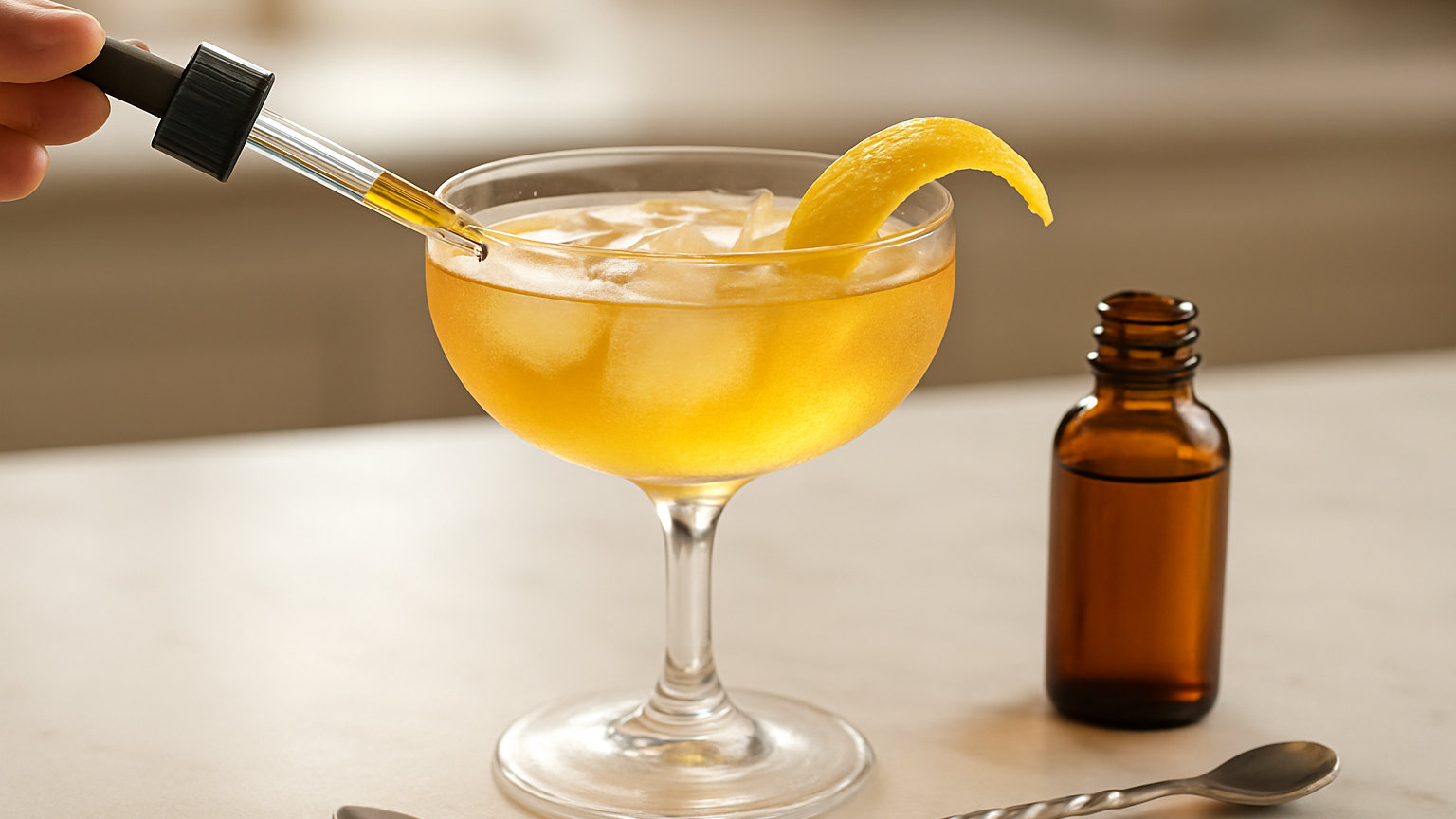
Small dark glass bottles with pipette droppers are inexpensive and sold widely.
Dark glass protects the contents from light, and the dropper is what makes drop-level dosing practical.
A set of six covers a reasonable collection.