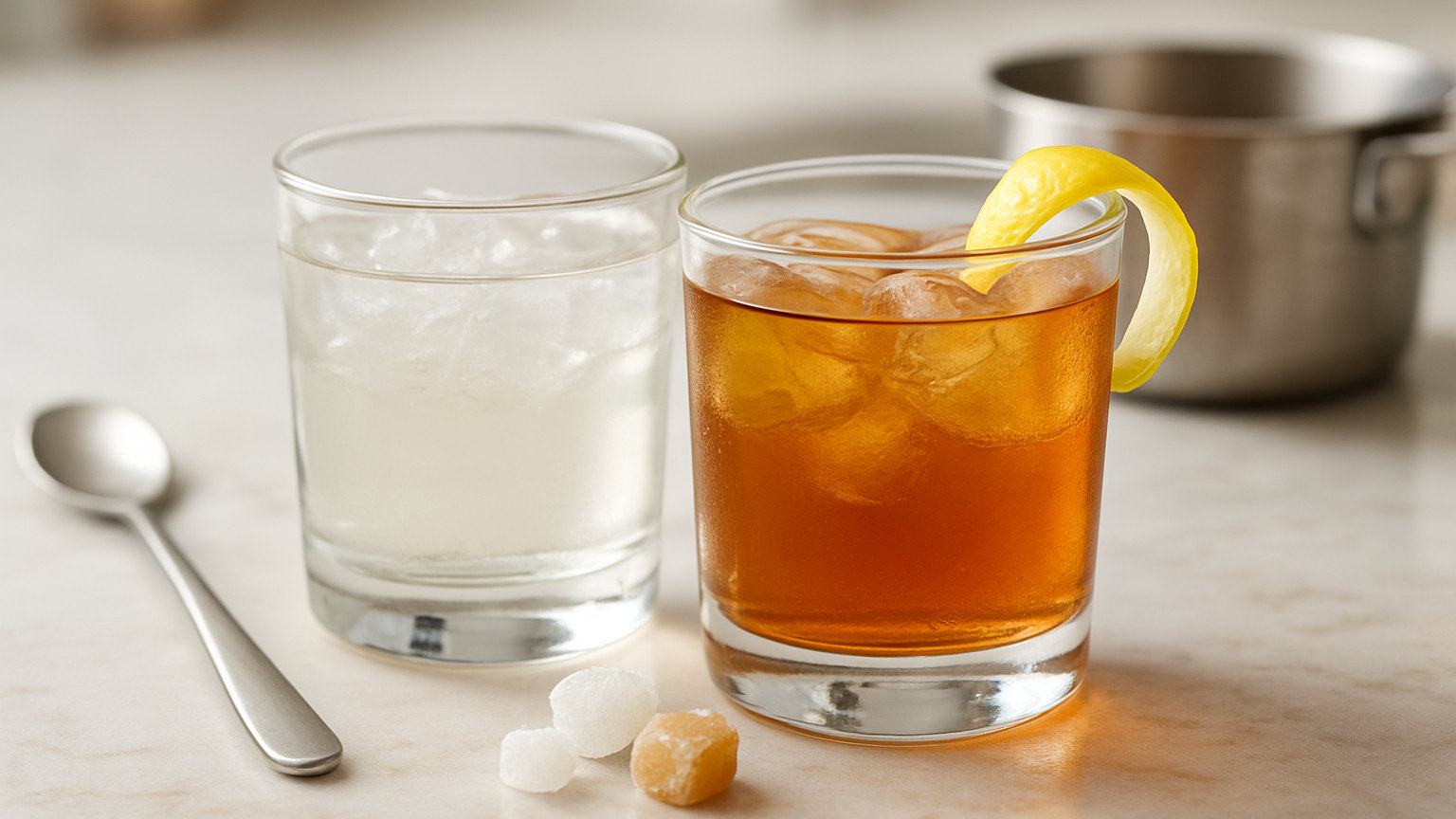
A syrup made with white sugar contributes sweetness and nothing else. One made with an unrefined sugar contributes sweetness plus molasses, caramel and a degree of bitterness, which is either an improvement or an intrusion depending on the drink.
White sugar
Caster sugar is the default: fine enough to dissolve quickly and entirely neutral in flavour.
Granulated works and takes longer to dissolve.
Use it wherever you want the spirit and the citrus to be the flavour, which covers most sours, most highballs and anything delicate.
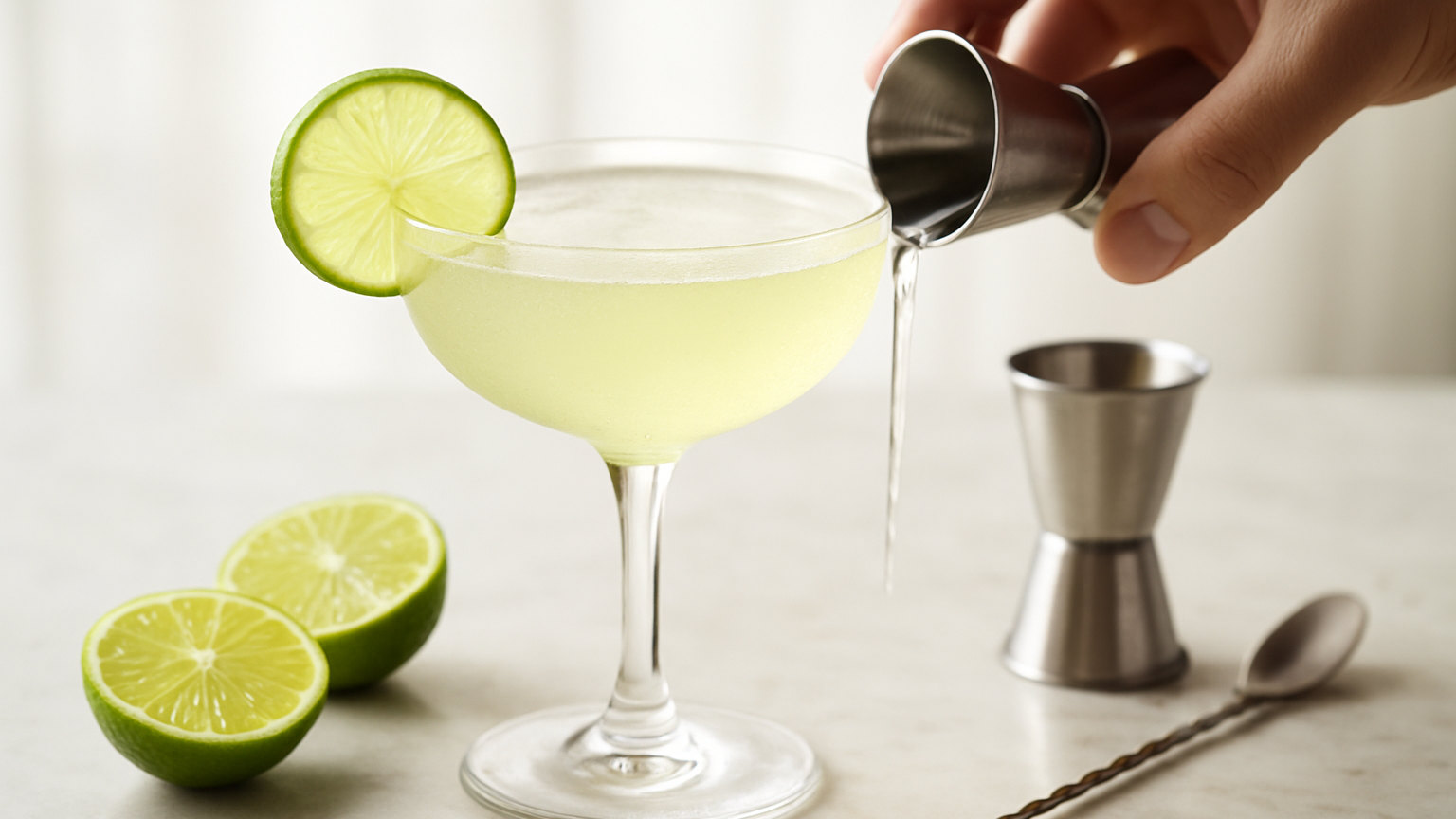
A daiquiri or a gin sour made with white sugar tastes of rum or gin. The same drink with demerara tastes partly of molasses.
Demerara
A partly refined cane sugar with a light molasses content, producing a golden syrup with caramel and toffee character.
It suits aged spirits: bourbon, rye, aged rum, brandy and anything with oak influence.
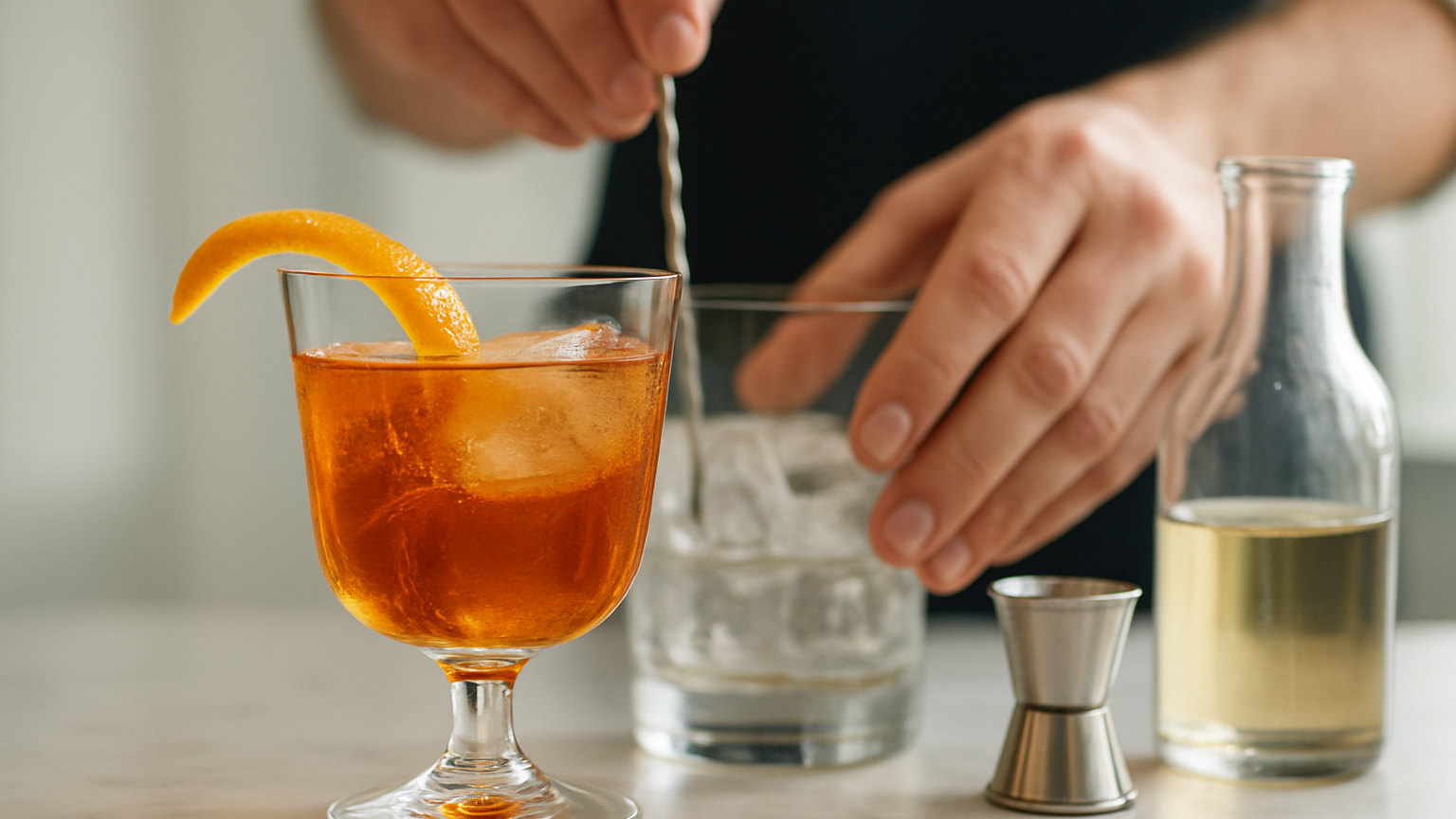
An old fashioned made with demerara syrup rather than white is noticeably rounder and more complex, and a great many bartenders use it as standard for that drink.
It is also the traditional sweetener in a good deal of tiki brewing, where it stands up against dark rum.
Muscovado and dark sugars
Considerably more molasses, producing a dark, treacly syrup with real bitterness alongside the sweetness.
Assertive enough to dominate, so use it in small quantities or in drinks that can take it: dark rum, stout-based drinks, anything spiced.
A little muscovado combined with demerara gives depth without taking over, which is a useful compromise.
Honey
Too thick to measure or mix cold, so it is thinned with warm water, usually three parts honey to one of water.
It brings floral character and a rounder body, and it suits whisky, gin and rum.
Different honeys behave very differently. A mild blossom honey is subtle; a strong heather or chestnut honey will dominate the drink entirely.
Honey is sweeter than sugar by volume, so reduce the quantity slightly when substituting.
It is worth noting that honey is not suitable for infants under one year old, which matters if you are making a batch of syrup that might be used for something else in the kitchen.
Agave
The natural partner for tequila and mezcal, since it comes from the same plant family.
It is sweeter than sugar syrup, so use around three quarters of the quantity, and it is thick enough to benefit from thinning with a little water for easier measuring.
A Tommy's margarita, which replaces the orange liqueur with agave syrup, is the clearest demonstration of what it does: drier, cleaner and more tequila-forward.
Maple
Distinctive and assertive, with a woody, caramel character.
It suits bourbon, rye and apple brandy particularly well, and it comes into its own in autumn drinks.
Use slightly less than sugar syrup and expect it to be tasted rather than merely felt. Darker grades are stronger and more interesting in a drink.
Others worth knowing
Palm sugar and jaggery both bring caramel and a faint smokiness, and they suit rum and Southeast Asian flavours.
Golden syrup is invert sugar with a distinctive flavour, and it works in a limited range of drinks.
Artificial sweeteners do not behave like sugar in a drink. They provide sweetness without body, and a cocktail made with one tastes noticeably thin. Anyone avoiding sugar for medical reasons should treat that as a limitation to work around rather than a straight substitution, and dietary questions of that kind belong with a doctor or dietitian rather than a drinks article.
Choosing
Match the sweetener to the spirit. White with clean spirits and delicate drinks, demerara with aged spirits, honey with whisky, agave with tequila, maple with bourbon.
And keep white syrup as the default, since it is the one that never gets in the way.
Trying it
Make two versions of the same drink, one with white syrup and one with demerara, and taste them together.
In a daiquiri the difference is obvious. In an old fashioned it is obvious and most people prefer the demerara.